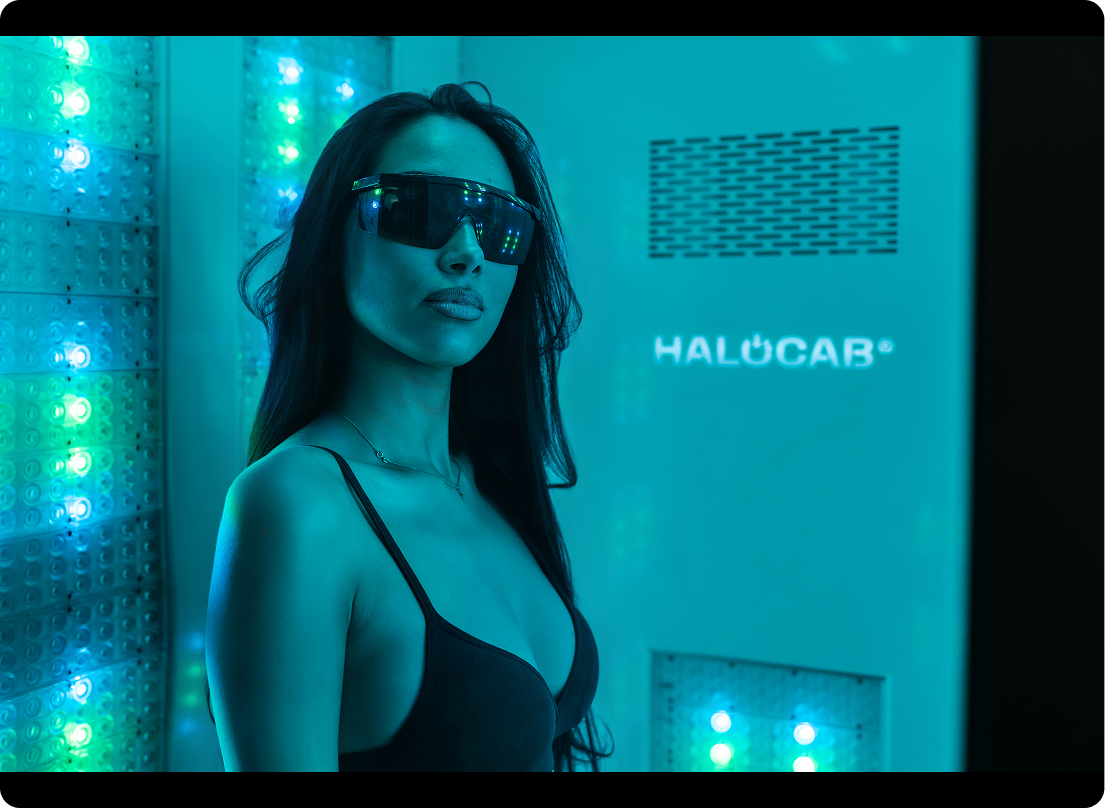
Sound has always influenced how we experience a space. From the quiet acoustics of a spa to music used during relaxation or meditation, what we hear can shape an environment just as significantly as lighting, temperature and materiality.
As wellness technology develops, sound is increasingly being incorporated into more sophisticated multi-sensory experiences. Alongside this has come growing interest in terms such as frequencies, Alpha, Theta, Delta, binaural beats and “healing frequencies.”
But these terms do not all mean the same thing — and the evidence behind them is not equal.
For operators designing modern wellness environments, the more useful question is not whether a particular number of Hertz can produce an extraordinary health outcome. It is how sound, atmosphere and technology can work together to create a considered wellness experience.
What Do We Mean by Frequency?
At its simplest, frequency describes how often something repeats over a given period. In sound, it is measured in Hertz (Hz), representing the number of sound-wave cycles per second.
The word frequency, however, is used very broadly within wellness. It can refer to sound frequencies, musical tuning, binaural beats, brainwave-frequency bands or electromagnetic frequencies associated with entirely different technologies.
That distinction matters.
A sound programme delivered through speakers is fundamentally different from light emitted at defined wavelengths, infrared energy or electromagnetic stimulation — even though all may be discussed using terminology involving frequency or wavelength.
For commercial wellness operators, understanding what a technology actually produces and how it is delivered is far more useful than relying on the word “frequency” alone.
Sound & the Wellness Environment
There is an established body of research examining music and sound in relation to relaxation and stress.
A large meta-analysis covering more than 100 randomised controlled trials found music interventions were associated with reductions in psychological and physiological stress-related outcomes. Research continues into different forms of auditory stimulation, although results can depend on the sound, the individual and the environment in which it is experienced.
This does not mean that every sound — or every frequency — produces a predictable effect.
It does help explain why sound can be an important part of designing a wellness environment.
A considered soundscape combined with controlled lighting, comfortable surroundings and appropriate acoustics can create something very different from simply placing a piece of technology in a room.
Alpha, Theta & Delta: What Do They Mean?
Alpha, Theta and Delta are terms used for ranges of electrical activity observed in the brain using electroencephalography (EEG). They are associated broadly with different states of activity, although human brain function is considerably more complex than simply switching between individual bands.
These terms also appear within sound-based wellness technologies.
Binaural beats, for example, are an auditory phenomenon created by presenting slightly different tones to each ear. This has led to research into brainwave entrainment — the possibility that auditory stimulation may influence neural oscillatory activity.
The research is interesting, but it remains an evolving area.
Systematic reviews have found mixed results, with considerable variation between study methods and outcomes. Some studies suggest potential effects in areas such as relaxation, anxiety, sleep or cognition, while others do not demonstrate consistent entrainment effects.
That distinction is important.
What About 432 Hz, 528 Hz & “Healing Frequencies”?
Specific frequencies have become increasingly prominent across wellness and social media.
Music tuned to 432 Hz, for example, is sometimes presented as having fundamentally different biological effects from standard 440 Hz tuning. Small studies have explored the subject, with some interesting findings, but the research remains limited and larger, more rigorous studies are needed.
That is very different from evidence that a particular frequency can “heal” the body or treat disease.
The same caution should be applied to sweeping claims surrounding other individual frequencies.
For wellness operators, there is little advantage in building a premium proposition around claims that cannot be adequately substantiated.
A more credible approach is to consider what sound can contribute to the experience: atmosphere, immersion, programme differentiation and sensory engagement.
From Frequency to Multi-Sensory Wellness
The more interesting development in modern wellness may not be any single modality operating in isolation.
It is the ability to bring multiple sensory elements together within a carefully controlled environment.
Light changes what we see. Sound changes what we hear. Aroma contributes another sensory layer. Air and temperature influence how a space physically feels. Interior design determines how those elements are experienced together.
When coordinated thoughtfully, the technology becomes less prominent and the experience becomes the focus.
This is particularly relevant for hotels, spas, longevity concepts and premium wellness facilities looking to create experiences that feel considered rather than clinical.
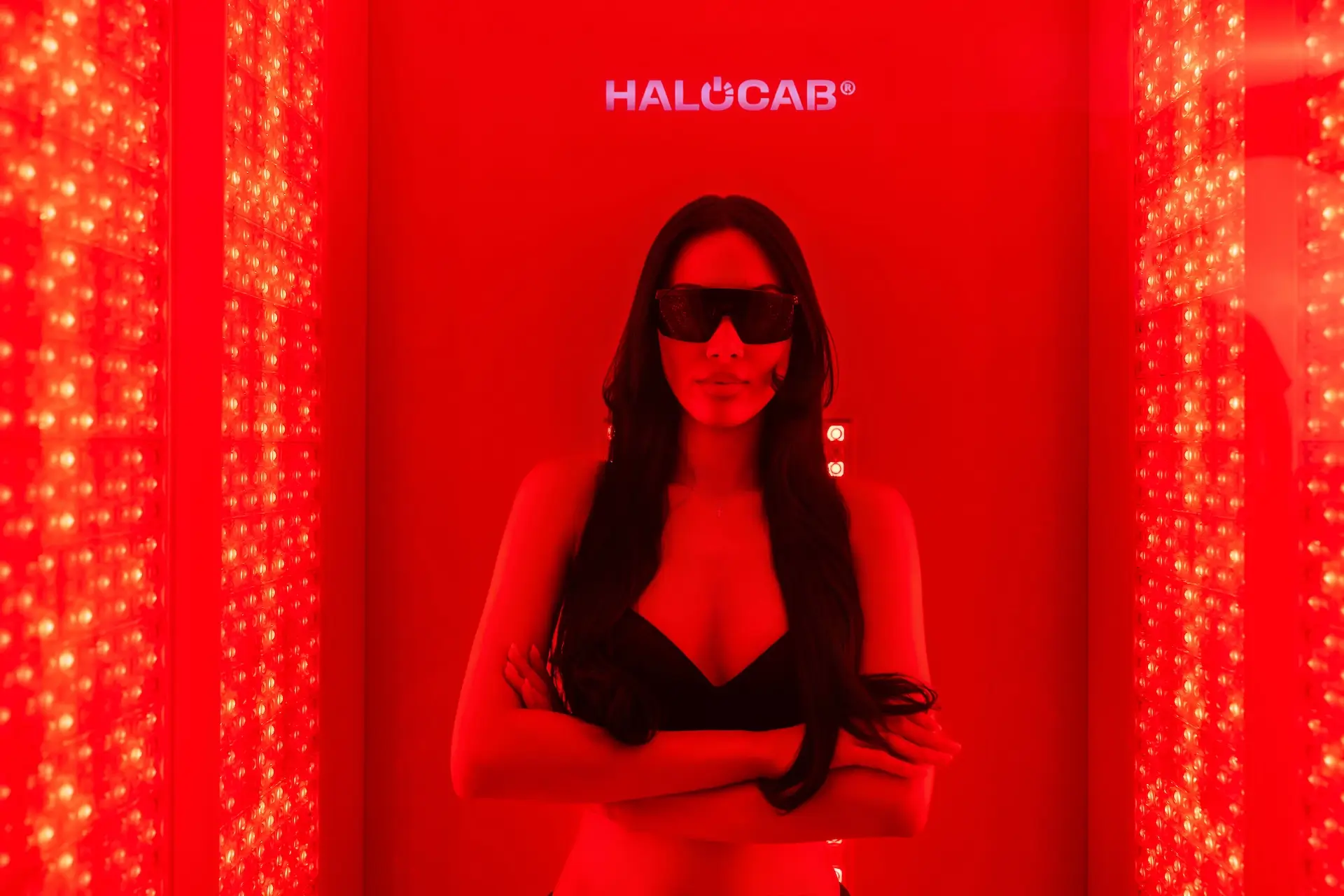
How HALOCAB Integrates Frequency-Based Sound
HALOCAB approaches frequency-based sound as one component within a wider multi-sensory environment.
According to MEDNER's current product information, HALOCAB brings together five modalities:
Light · Dry Salt · Ionized Oxygen · Frequencies · Aroma
Its frequency component incorporates sound programmes associated with Alpha, Theta and Delta, selected according to the chosen programme.
Rather than positioning sound as an isolated experience, HALOCAB coordinates it with other sensory elements within the same controlled cabin.
From a facility perspective, this integration is particularly interesting.
Instead of creating several disconnected experiences, multiple elements can form part of a single client journey within one compact environment.
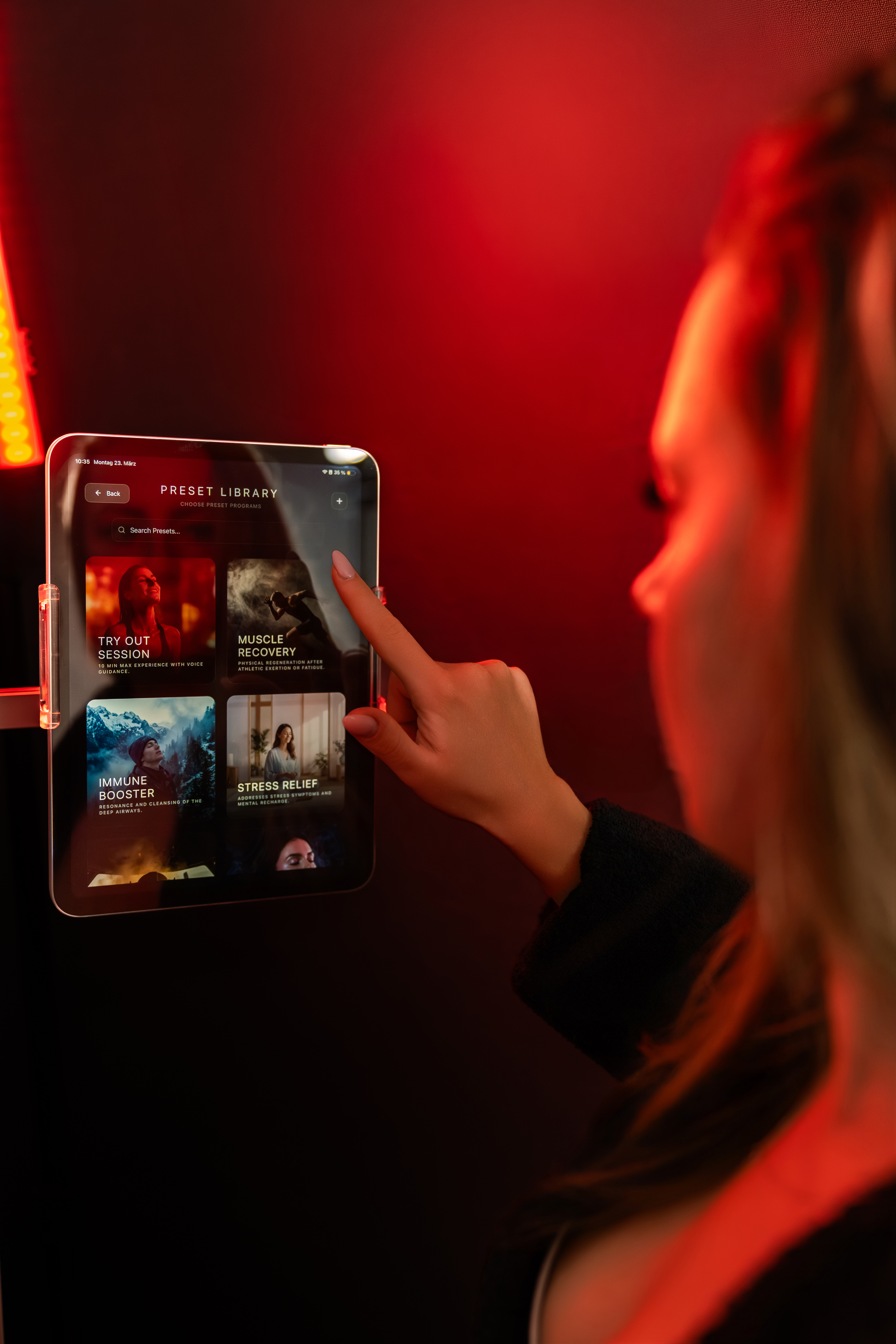
Designing the Experience Around the Technology
Technology alone does not create a premium wellness experience.
Where a system is positioned, how a client approaches it, privacy, acoustics, lighting, materials and what happens before and after a session all influence how that technology is perceived.
Operators considering frequency-based or multi-sensory wellness technology should therefore look beyond individual features and ask:
- 01What does the system actually produce and how is it delivered?
- 02What claims does the manufacturer make, and what evidence supports them?
- 03How does the experience integrate with other wellness facilities?
- 04What space, staffing and client-flow requirements are involved?
- 05Can programmes complement memberships, packages or existing services?
- 06Most importantly, what does the technology contribute to the experience we want to create?
This is where technology specification, commercial planning and interior integration need to work together.
Technology Without the Hype
Wellness technology is advancing quickly, and credible innovation can sometimes sit alongside claims that move considerably faster than the evidence.
Those two things do not need to be confused.
Sound can contribute to atmosphere and immersion. Light, aroma, air and physical surroundings add further sensory layers. Integrated technology can bring those elements together within increasingly sophisticated wellness environments.
The opportunity is to combine them intelligently while remaining clear about what is established, what is emerging and what remains unproven.
That is a stronger foundation for modern wellness than extraordinary promises.
Advanced technology. Thoughtfully integrated into modern wellness environments.